Monday, May 23, 2011

Breaking News! Hard Hat Exemption Certificate Gets OK

Ever had that age old argument with people not wanting to wear their hard hat? 'It's too heavy...too hot...won't stay on...'


All your answers here, brilliant :)

Health and Safety for Beginners
See more at www.healthandsafetytips.co.uk

Hard Hat Exemption Certificate

Exemption certificate for persons working in mandatory safety helmet areas.


The company is pleased to announce that it has discovered a little known scheme where a person can be exempted from the wearing of a safety helmet. A person exempted under this scheme will designated as a ‘Hard Head’. A person who thinks that they can work safely in a designated hard hat area without wearing one can apply for an exemption certificate.


In order to qualify for this certificate the person must undergo a series of tests, in order to prove that their skull offers the same protection as the standard safety helmet. The test series is conducted three times. Whist the tests are the same in each series, each series will be preceded by a 24 hour conditioning period. Firstly your head will be kept at a constant 500C, for the second series it will be kept at -200C and for the third it will be submerged under water. For this part of the test series you will be responsible for supplying your own air.


Test 1. Shock Absorption Testing.


For this test your head will be held immobile whilst a 5kg hemispherical striker is dropped from a height of 1metre. The striking force when measured at the neck must not exceed 5kN. In order to successfully pass this part of the series there must be no destruction of the skull or any of its component parts.


Test 2. Penetration Test.


This test is also conducted with the head held immobile. A 3kg steel cylinder with a hardened point is dropped from a height of 1metre. The cylinder must not be able to penetrate far enough to cause damage.


Test 3. Flammability test.


A Bunsen burner flame shall be applied to the side of the head for a period of 10 seconds. After which your head must not have caught fire.


For those whose work may bring them into contact with electricity a set of further tests must also be passed.


Test 4. Current leakage.


This test is in to parts after conditioning in fresh water as described above. A probe will be placed at various points around your head. A second probe will be attached to you neck. Each time the first probe is placed on your head a charge of 1200v AC will be applied for 15 seconds. There should be no current leakage between the two probes.

This test is then repeated using saltwater as the conditioning agent.


Test 5. Conductivity


In this test two probes are placed at various points around your head no closer than 20mm. each the probes are placed a current of 1200v AC will be applied. There should be no current between the two probes.


Please note that if you have had your head metal electro-plated you will not be able to be put forward for tests 4 and 5.


If you are successful in passing all the above tests you will be issued with an exemption certificate which you will have to carry at all times. If you feel that such a program of tests might be too much for you complete you can always just wear a safety helmet instead. All safety helmets used by the company have to pass all of these tests in order to be given the CE mark.


Hard Hat Care.


In order to give the best service and preserve to capability of your hard hat here are a few suggestions to help.


1. Keep it clean. Wipe all parts over with a cloth moistened with a mild detergent, allow to air dry. Do not use aggressive cleaning solutions or try to force dry the hard hat.

2. Do not ever cut any ‘ventilation’ holes in your hard hat, they do not work and seriously weakens it.

3. Do not paint the solvents in paints attack and weaken the shell.

4. Don’t put anything inside the hard hat except your head. Do not use it to carry objects.

5. It will only give you full protection when worn correctly so don’t wear it back to front.


Common complaints.


“It’s to heavy” Hard hats on weight about 14 ounces and that’s only a few ounces more than a cloth cap, but compare the extra protection afforded by the hard hat.


“It’s to hot” Actual measurements taken during hot weather show that it is actually a lot cooler under a hard hat.


“Wearing one gives me a headache”. An object that has fallen some distance will give you a greater one.


“It won’t stay on.” That’s right it won’t in a high wind but the use of a chinstrap will ensure that it will stay on. Making sure your hard hat is properly adjusted to fit you correctly will also ensure that it stays on your head.


Your Hard Hat is for your protection but like any other piece of safety equipment unless you adjust it to fit and wear it correctly it will not give you the maximum protection.

Read more at www.healthandsafetytips.co.uk
 

Sunday, May 15, 2011

New prizes added to this year's prize draw worth thousands of £'s!

Our list of prizes were fantastic when we started this year’s draws, but more prizes have been donated and upgraded!


NEW – NEBOSH Diploma eLearning worth £3,000 donated by RRC Training.


NEW – from May’s draws onwards, one NEBOSH Certificate (eLearning) with the training provider SHEilds Ltd. What’s even better is you get to choose which certificate you want to study!


UPGRADED – from May’s draws onwards, one NEBOSH General Certificate (eLearning) course donated by Wise Global Training Ltd.


FANTASTIC! Many thanks to our contributors, this is just extraordinary!

Health and Safety for Beginners

New prizes added to this year’s prize draw!

New prizes added to this year’s prize draw!


Our list of prizes were fantastic when we started this year’s draws, but more prizes have been donated and upgraded!


  • NEW – NEBOSH Diploma eLearning worth £3,000 donated by RRC Training.

  • NEW – from May’s draws onwards, one NEBOSH Certificate (eLearning) with the training provider SHEilds Ltd. What’s even better is you get to choose which certificate you want to study!

  • UPGRADED – from May’s draws onwards, one NEBOSH General Certificate (eLearning) course donated by Wise Global Training Ltd.


FANTASTIC!   Many thanks to our contributors, this is just extraordinary!


here’s what you could win in 2011


To see all of our winners and prizes from previous prize draws, click HERE.


>>>> March <<<<


Health, Environment and Risk Training


One NEBOSH General Certificiate (distance learning) donated by Health Environment and Risk Training


>>>>


Wise Global Training Ltd


One IOSH Managing Safely (eLearning) course donated by Wise Global Training Ltd


>>>>


Phoenix Health and Safety


NEBOSH Certificate (distance learning) donated by Phoenix Health and Safety. What’s even better is you get to choose which certificate you want to study!


>>>> April <<<<


Safety Photo


One Essentials of H&S at Work (paperback) donated by Safetyphoto


>>>>


Santia Training Services


One NEBOSH General Certificate (eLearning) donated by Santia Training Services


>>>>


Wise Global Training Ltd


One IOSH Managing Safely (eLearning) course donated by Wise Global Training Ltd


>>>> May <<<<


SHEilds Ltd


One NEBOSH Certificate (eLearning) with the training provider SHEilds Ltd. What’s even better is you get to choose which certificate you want to study!


>>>>


Health and Safety for Beginners


£50 Amazon vouchers donated by Health and Safety for Beginners


>>>>


Wise Global Training Ltd


One NEBOSH General Certificate (eLearning) course donated by Wise Global Training Ltd


>>>> June <<<<


Phoenix Health and Safety


NEBOSH Certificate (distance learning) donated by Phoenix Health and Safety. What’s even better is you get to choose which certificate you want to study!


>>>>


SHEilds Ltd


One NEBOSH Certificate (eLearning) with the training provider SHEilds Ltd. What’s even better is you get to choose which certificate you want to study!


>>>>


Wise Global Training Ltd


One NEBOSH General Certificate (eLearning) course donated by Wise Global Training Ltd


>>>> July <<<<


Safety Photo


One Essentials of H&S at Work (paperback) donated by Safetyphoto


>>>>


SHEilds Ltd


One NEBOSH Certificate (eLearning) with the training provider SHEilds Ltd. What’s even better is you get to choose which certificate you want to study!


>>>>


Wise Global Training Ltd


One NEBOSH General Certificate (eLearning) course donated by Wise Global Training Ltd


>>>> August <<<<


Health and Safety for Beginners


Surprise prize donated by Health and Safety for Beginners


>>>>


SHEilds Ltd


One NEBOSH Certificate (eLearning) with the training provider SHEilds Ltd. What’s even better is you get to choose which certificate you want to study!


>>>>


Wise Global Training Ltd


One NEBOSH General Certificate (eLearning) course donated by Wise Global Training Ltd


RRC Training


NEBOSH National Diploma – eLearning worth £3,000 donated by RRC Training


>>>> September <<<<


Phoenix Health and Safety


NEBOSH Certificate (distance learning) donated by Phoenix Health and Safety. What’s even better is you get to choose which certificate you want to study!


>>>>


Wise Global Training Ltd


One NEBOSH General Certificate (eLearning) course donated by Wise Global Training Ltd


>>>>


SHEilds Ltd


One NEBOSH Certificate (eLearning) with the training provider SHEilds Ltd. What’s even better is you get to choose which certificate you want to study!


>>>> October <<<<


Wise Global Training Ltd


One NEBOSH General Certificate (eLearning) course donated by Wise Global Training Ltd


>>>>


SHEilds Ltd


One NEBOSH Certificate (eLearning) with the training provider SHEilds Ltd. What’s even better is you get to choose which certificate you want to study!


>>>> November <<<<


Phoenix Health and Safety


NEBOSH Certificate (distance learning) donated by Phoenix Health and Safety. What’s even better is you get to choose which certificate you want to study!


>>>>


SHEilds Ltd


One NEBOSH Certificate (eLearning) with the training provider SHEilds Ltd. What’s even better is you get to choose which certificate you want to study!


>>>>


Wise Global Training Ltd


One NEBOSH General Certificate (eLearning) course donated by Wise Global Training Ltd


>>>> Be part of something special <<<<


If you would like to donate a prize to this fantastic give away, CLICK HERE! Let’s do something extraordinary!


>>>> Fantastic! <<<<


via Health and Safety For Beginners Prize Draw – Prizes.

Read more at www.healthandsafetytips.co.uk
 

Sunday, May 08, 2011

Builder's bum - new meaning to 'get it right up ye'!

OMG, pain beyond imagination!

Amplify’d from www.austriantimes.at
Austrian Times – we've got Austria covered – Logo

Builder's bum


A 31-year-old builder was left in agony when a freak slip from a ladder thrust the handle of a shovel 20 inches up his backside.

Astonished paramedics ferried luckless labourer Michael Mayer to hospital in Munich, Germany, where surgeons cut away the handle with an angle grinder.

"It was a million-to-one shot accident. He was up the ladder and lost his footing and, as he fell, one of those American-style spades without a grip on the end went right up his bottom. It was a sickening scream," one workmate said.

Hospital authorities say the man has undergone a surgery to remove the remaining section of the handle and describe his condition as "stable."

Read more at www.austriantimes.at
 

NEBOSH exam worked example by @@PhoenixHSC

Great NEBOSH revision

Health and Safety for Beginners
Published on 5 March 2006
Phoenix Health and Safety

OK we’ve talked about all the theory – now let’s put it all together and try to give a perfect answer to a recent exam question:


“Volunteers are involved in collecting bags of books, clothes and other donated goods from householders. The bags are loaded into vans for delivery to a chain of charity shops. Explain how the charity should assess the risks to the charity workers, identifying the particular issues that would need to be considered at each stage of the assessment” (NEBOSH Diploma Part One, June 2003)


First things first – look at the action verbs. You are being asked to explain how the problem should be assessed and identify the particular issues at key stages.


Re-read the question now, and underline your key signposts:


“Volunteers (unskilled, no selection criteria?) are involved in collecting bags (manual handling – size, weight, shape etc.) of books, clothes and other donated goods from householders (violence, dogs etc.). The bags are loaded into vans (driven by who? Vehicle hazards) for delivery to a chain of charity shops. Explain how the charity should assess the risks (assess the risks, not control them) to the charity workers, identifying the particular issues that would need to be considered at each stage of the assessment” (NEBOSH Diploma Part One, June 2003).


As this question is essentially about how to carry out a risk assessment, the 5 steps approach would be a good structure to follow. This question was worth 20 marks, so a plan would be in order:

PLAN

1. Identify hazards

Manual Handling

Violence

Animals

Contents of bags

Vehicles


2. Decide who can be harmed

Volunteers – old, untrained, health problems, how many?


3. Evaluate risks

Probability/severity

Frequency/duration

Evaluate existing controls

Legal requirements


4. Record


5. Review

ANSWER
No need for a flowery intro about how many injuries are cause by manual handling or where risk assessment comes from – just get on with it!!
IDENTIFY THE HAZARDS

The first stage of a risk assessment is concerned with identifying hazards, which in this case may be as follows:


Violent assault by members of the public or being attacked by dangerous dogs


Musculoskeletal disorders caused by lifting bags or constraints on posture when working inside the vans


Injuries caused by the contents of the bags e.g. sharps or chemicals


Slips, trips and falls due to uneven surfaces, kerbs, steps etc.


Traffic accidents involving the vans, especially if they were poorly maintained or the bags caused an obstruction inside


Vans being struck by other road vehicles


Poor lighting due to work in the evenings or in autumn/winter


Weather conditions could be a problem especially if particularly hot, wet, cold or windy


Lone working which may result in a lack of communication between volunteers and their supervisors


Manual handling would be the major hazard due to a variety of factors: The bags may have to be carried for long distances and there will be a large amount of repetitive handling. Lots of stooping and twisting may also be required inside the van. The bags themselves may be heavy or bulky, and as their contents are unknown, may be unstable or unpredictable.

PEOPLE AT RISK

he next stage is to consider how many people are affected by the risk, and who they are.


Volunteers may well be elderly and are likely to be retired. This means that they may have existing health pr

The next stage is to consider how many people are affected by the risk, and who they are.


Volunteers may well be elderly and are likely to be retired. This means that they may have existing health problems and may not be as strong as they once were. Pregnant women or young people would also be at increased risk.

EVALUATE THE RISKS

To come up with a level of risk, there are several factors which need to be considered:


The likely severity of injury if an accident were to happen, for example a slipped disc might be an outcome of a manual handling injury


The probability that an accident was going to occur


The duration and frequency of exposure to the hazards


Existing control measures should be evaluated to assess their effectiveness. These may be things such as manual handling training, supervision, mechanical aids etc.


The law should be considered to see if more needs to be done. The relevant law here are the Management of Health & Safety at Work Regs (Risk Assessment) and the Manual Handling Regs

RECORD FINDINGS
The significant findings of the risk assessment should be recorded and information on these findings should be provided to employees
REVIEW

The risk assessment should be reviewed when there is reason to believe that it is no longer valid. This may be for a variety of reasons, e.g.:


Lapse of time


Enforcement action


An accident has occurred


There you go - 20 marks to start you off with! Too many students didn’t use the 5 steps approach so didn’t think widely enough to get good marks. Lots also gave long lists of how to control hazards, which was not asked for and so attracted no marks.


You can read the potted guide to taking NEBOSH exams to help you along by clicking the following link, or by browsing the articles section:


A Potted Guide to Taking NEBOSH Exams

Well that’s about all the help I can give you, so it just remains to say:

Good Luck!

Nick Higginson MSc CMIOSH Dip2.OSH SpDipEM MIIRSM

Read more at www.healthandsafetytips.co.uk
 

10 things you should know about Legionnaires' Disease and its prevention

Excellent article by an ex Health and Safety Executive specialist inspector

Health and Safety for Beginners
there is no such thing as a stupid or daft health and safety question

10 things you should know about Legionnaires' Disease and its prevention

Epsilon Training & Consultancy Ltd

1. The disease was first recognised following an outbreak in Philadelphia in 1976 and named after the veterans’ organisation, the American Legion, who were holding a convention and whose members were the main victims.


2. Legionnaires’ Disease is a form of pneumonia and is fatal in about 12% of cases. Legionellosis is a collective term for diseases caused by the same organism and, as well as Legionnaires’ Disease, includes milder forms such as Lochgoilhead Fever.


3. The Legionella bacterium is the cause, usually L. pneumophila, but any Legionella species can be involved. In the UK there are usually about 200 cases each year, about half of them contracted abroad. Most cases contracted in the UK are single cases, sometimes without a known source. Large outbreaks with tens of cases and several deaths occur every few years.


4. Any water system can potentially harbour and grow Legionella if the water is between 18-48 oC in any part of the system. To infect people, the water then needs to be dispersed in air as fine droplets, which are then breathed in. Cooling towers are most commonly involved with large outbreaks because they spread high numbers of droplets over a large area.


5. Controlling risk is based on four main measures: keeping water systems clean; keeping water temperatures below 18 oC or above 50 oC; chemical treatment to prevent the organism growing; reducing the escape of droplets. ‘L8’ is HSE’s guidance document on controlling risk, ‘The control of Legionella bacteria in water systems’.


6. Firms with at risk water systems usually employ water treatment contractors to carry out most of the actions required for control. However, the firm retains most of the responsibility and must appoint a responsible person to manage and supervise implementation. Inadequate management, lack of training of staff and poor communication between the firm and its contractor have been identified by HSE as important factors contributing to outbreaks.


7. Cooling towers and evaporative condensers must be registered with the local authority. Control of Legionella in these systems is based on thorough cleaning and disinfection, usually every six months, routine continuous dosing with an ionising biocide such as chlorine or bromine, or a mixture of non-ionising biocides, and careful engineering management of the system. Choice of construction materials and the fitting of a so called ‘drift eliminator’, actually a droplet barrier, are also important.


8. Hot and cold water systems are controlled by ensuring cleanliness, disinfecting after major plumbing work, keeping cold water cold and hot water hot, and possibly by routine chemical treatment such as chlorine dioxide. Other systems such as vehicle washes, industrial spray systems and many others, are controlled in a similar way but rarely need chemical treatment.


9. Checks that the control measures are working are carried out weekly, monthly and quarterly. These include water chemistry tests for cooling systems, temperature readings and bacterial tests. The common bacterial growth test is a ‘dipslide’ – a paddle coated with a solid growth medium which is dipped in the water and then incubated. It grows almost all bacteria – but not Legionella! The growth of any bacteria above a certain number is a good indicator of whether Legionella could grow. Legionella themselves are difficult to grow and need special techniques. The test is useful, but a negative result does not mean that there is no risk.


10. Outbreaks - large or small - are fortunately rare, but the impact of illness and death has a major effect on the firms involved and the surrounding community. During a major outbreak, HSE and other agencies visit all potential sources in an area. If a firm is found to have deficient control measures, they have the powers to take legal action whether or not the system is shown to be part of the outbreak.
Read more at www.healthandsafetytips.co.uk
 

Saturday, May 07, 2011

Safe Room Saves Lives in Oklahoma Tornado

Deadly storms rolled through Oklahoma, with a tornado touching down in Atoka County.

Amplify’d from paper.li
blog.fema.gov - Posted by: Public Affairs
On April 14, deadly storms rolled through Oklahoma, with a tornado touching down in Atoka County. As the winds of up to 165 miles-per-hour roared overhead, nearly 200 men,...
Read more at paper.li
 

Thursday, May 05, 2011

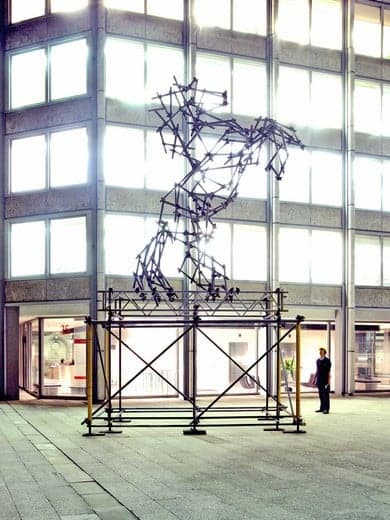
Scaffolding works of art

Amazing creations or too much time on their hands?

Amplify’d from scaffmag.com
ScaffMag.com Scaffolding Magazine | Scaffolding Jobs | Scaffolding News | Scaffolding Training | Scaffolders
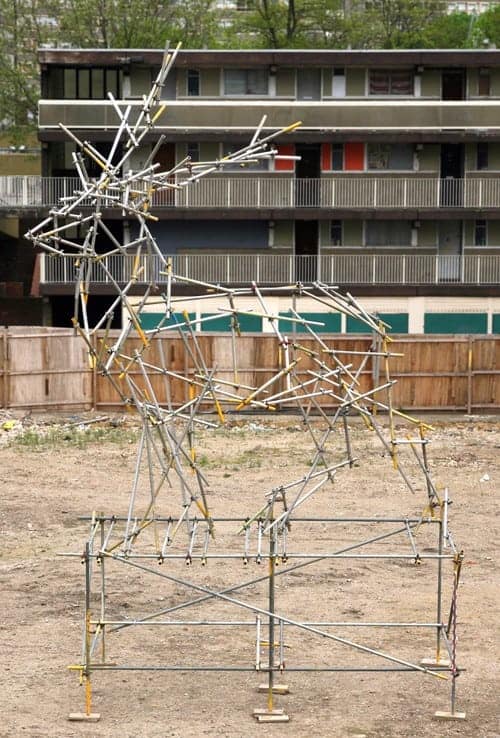
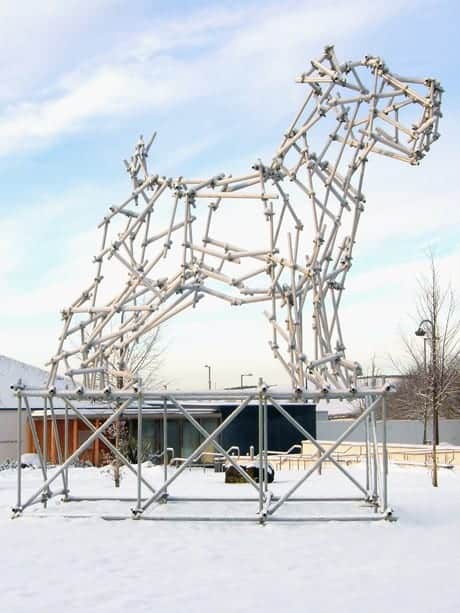
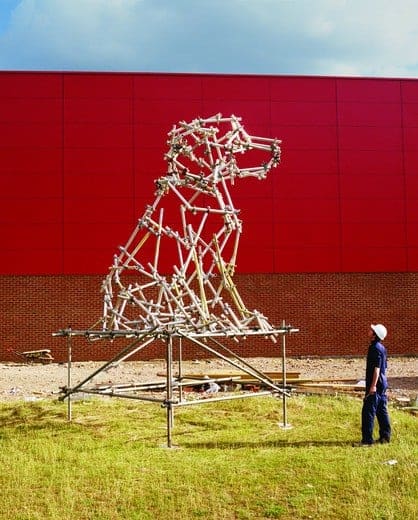
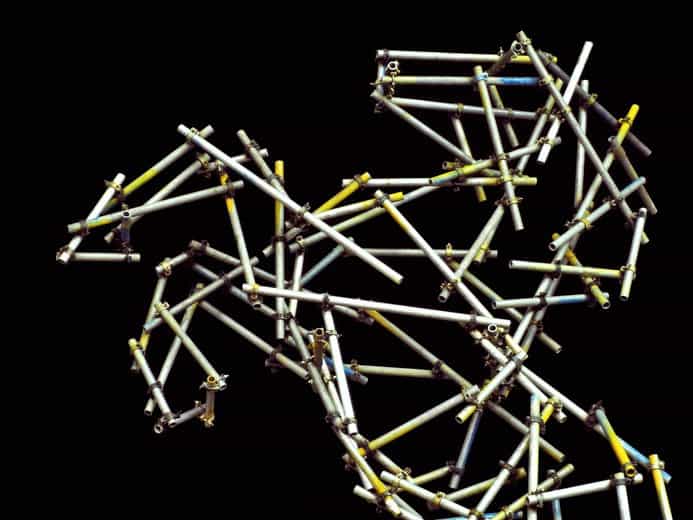
Theses amazing sculptures are the work of sculptor Ben Long the project started in 2004 and was in development for 2 years.

This ambitious series of scaffolding sculptures were inspired by his experience of working on construction sites as a teenager and each one took up to 3 weeks to construct using tube and fitting. Throughout the project Ben worked with specialists including D+R Scaffolding Group and Amiri Construction Ltd.


stag-scaffolding-sculpture-1pr


OLYMPUS DIGITAL CAMERA


Ben_Long_01.tif


20-benlong-horse-scaffolding-sculpture-detail-02-jpg


20-benlong-horse-scaffolding-sculpture-01-jpg
Read more at scaffmag.com
 

Monday, April 18, 2011

Common Sense Common Safety

Common sense is a term used by tabloids, politicians and lazy managers to mean that you don’t need to explain the risks associated with something because it’s common sense and therefor everyone already understands if something should be done, how something should be done, precautions that should be taken.

Health and Safety for Beginners

Common Sense Common Safety

Common sense is a term used by tabloids, politicians and lazy managers to mean that you don’t need to explain the risks associated with something because it’s common sense and therefor everyone already understands if something should be done, how something should be done, precautions that should be taken.

For example most people would consider it common sense not to inhale poisonous fumes in the knowledge that it could give them cancer and other adverse health effects…. but people still smoke tobacco which they take from packets which state in large type “Smoking Kills”, so that particular sense is not common to them.

Another example:- most drivers of vehicles would agree that driving across a level crossing when the barriers are down is not a sensible thing to do, but people do drive and walk across closed level crossings frequently (as evidenced by the transport police report on the subject).

Workplace examples showing that common sense does not in fact exist can be seen by looking at the prosecutions database on the HSE website, where you can see that people go on fragile roofs with no precautions, work in excavations that are not supported, access elevated positions using unsafe structures and equipment, walk behind reversing vehicles, etc.

Cultures are diverse,and this leads to different perceptions of what is an acceptable risk to safety or health.

For example it was considered acceptable to a factory in china that people making popular IT devices were regularly jumping from the roof of the building It took a whisleblower publically telling the CEO of the American company who sell these devices about it to get something done about it… in UK one such suicide would have been all over the news and something would have been done immediately.

The culture in china is very different from the culture in the UK. The cultures in East European countries, India, Pakistan, Brazil, and Middle Eastern countries are all very distinct from each other with regard to the value of human life and shown by the level of protection at work and the level of risk which is considered acceptable. People from these different cultures bring their own values with them when they come to the UK to work, so there is little commonality to be found in their perception of risk and their willingness to work within a UK regulatory regime, which makes work in this field much more challenging and interesting, one of the reasons I enjoy it so much.

Because of the evidence I am faced with I have concluded that the term Common Sense means radically different things to different people based on their age, past experience, training, and cultural background.

If the meaning of a term is not standard and clear, then it is at best unreliable and probably counterproductive to use it to convey any meaningful information, so you’ll never find me using the term Common Sense except to discourage its use by people who are trying to convey an important and clear message.

Sense is not a measurable thing, there is no scale we can use to determine how much of it an individual has, it cannot be relied upon to control behaviour (as evidenced by the examples above) and to assume that some standard amount of sense is somehow common to all people is obviously a preposterous proposition.

Where someone can be injured or their health damaged, it is clear that some subjective arbritary value of sense cannot be relied upon to prevent that person being harmed.

If there is a significant risk, only planning and competence can be relied upon to provide individual protection. To rely on common sense instead is to rely on a fictional thing, and no protection at all.

I am however very happy for journalists, and politicians to go about their lives without any control over their safety except their own common sense, since that would thin out the population of these people to a lower and more acceptable level, and perhaps encourage them to stop slagging the people who currently work to keep working people safe.

Read more at www.healthandsafetytips.co.uk
 

Tuesday, April 05, 2011

HSE simplifies business advice

This site is for employers and those who want some basic information on what they must do to make sure their businesses comply with health and safety law.

Amplify’d from www.hse.gov.uk
HSE

Health and safety made simple

The basics for your business

If you think health and safety has to be complicated - it doesn’t. This site will make it easier for you to comply with the law and manage health and safety in your business.

For many businesses, all that’s required is a basic series of tasks. The site will take you through the steps and help you make sure you have done what you need to - and no more.

Read more at www.hse.gov.uk
 

Monday, April 04, 2011

Japan - cigs and alcohol more deadly

The after effects of the quake and tsunamis in Japan will cause clear and on-going pain and suffering for years, while the risks from the damage to the Fukushima Daiichi nuclear reactors look to be subsiding...Geoff Russell argues that any and all risks need to be put in perspective.

Amplify’d from www.thepunch.com.au

Cancer deaths in Japan will be from alcohol and ciggies

The after effects of the quake and tsunamis in Japan will cause clear and on-going pain and suffering for years, while the risks from the damage to the Fukushima Daiichi nuclear reactors look to be subsiding - see here for the latest updates. Meanwhile, Geoff Russell argues that any and all risks need to be put in perspective.

More deadly than nuclear. Pic: Getty Images

Residents living in the vicinity of the Fukushima nuclear plant face some considerable cancer risks during coming decades. They will come primarily from cigarettes, red meat, alcohol and salty foods. These should hardly be called risks, since each will definitely cause tens of thousands of new cancer cases every single year throughout Japan.

An additional possibility, a potential risk, hardly visible in comparison, may come from radiation as a result of the quake and tsunami damage at the Fukushima Daiichi nuclear power plant.

After the unrelenting horror of the biggest earthquake and tsunamis ever to hit Japan, you’d think the world’s journalists would jump on the biggest good news story to emerge from the carnage. This good news story is the performance of Japan’s nuclear reactors.

While the media focuses on the serious problems in a single cluster of older reactors, the more modern reactors shut down gracefully. Of 54 reactors in Japan with a combined capacity of 48 gigawatts, five clusters were affected by the quake with four shutting down successfully despite sometimes significant damage.

The cluster closest to the epicenter of the quake was Onagawa. It experienced significant damage, including a fire, but shut down without problems. Fukushima Daiichi isn’t far from its slightly newer sister plant, Fukushima Dainii. The four reactors at Dainii shutdown successfully despite significant damage caused by the quake.

The two plants were designed to withstand a 5.7 metre tsunami, but the tsunami that hit these two plants was 14 metres high.

The reactors didn’t buckle like some bridges and even the explosions at the reactors were trifling compared to the deadly conflagration at the Chiba oil refinery. The reactors stood up substantially better than the tsunami sea walls which turned back the waves of the massive 1960 Chilean earthquake but which failed this time with catastrophic consequences.

Despite this good news, the top 12 stories on Yahoo News that came up on the Sunday after the event included the following headlines; “Japan’s nuclear crisis deepens”,  “Japan quake evacuees scanned for radiation”, “Nuclear meltdown new threat for Japan”, “Japan grapples with nuclear crisis”.

There were only three other earthquake stories and five stories unrelated to the quake. While it was reasonable to talk about a Fukushima nuclear crisis there was never a national crisis.

Sunday’s nuclear focus was followed by a relentless week of fear mongering with every event related to the plants, regardless of magnitude or import, being painted as a harbinger of national, if not global, doom. This relentless fear mongering wained a little during the second week when the crisis in Libya finally shifted to lead story.

Nevertheless, the smallest puff of smoke from the reactors managed to reignite echos of the previous week’s panic.

Radiation facts missing in action

Most journalists showed an ignorance of radiation basics that could have, and should have, been rectified by 10 minutes with Wikipedia. Why didn’t they bother? SMH on March 16 reported that 100 millisieverts of radiation in a year would elevate cancer risks and followed it with:

Measurements at the damaged plants are now well below the lethal levels of 400 millisieverts an hour measured yesterday.


Lethal? 400 millisieverts per hour? Such levels are definitely to be avoided, but lethal? A key question is to ask what “elevate” means.

Two and a half hours spent receiving 400 millisieverts per hour is 1,000 millisieverts. According to Kelly Classic, a radiation physicist at the Mayo Clinic, if you exposed 125 people to such a dose, you would expect one of them to get cancer sometime in their life. How many of 125 people would normally get cancer? About 40.

In Australia, roughly 1 in 17 men get bowel cancer with another 1 in 22 getting lung cancer. About half of those bowel cancer cases are due to eating more than one red meat meal per week. It’s a safe bet that cigarettes, sake and even Aussie beef will cause far more cancers in Japan than the Fukushima reactors. There are about 60,000 new cases of both bowel cancer and lung cancer each year in Japan.

Lastly, it isn’t just that the risk of cancer from radiation is low, the most likely cancer from a reactor problem is probably thyroid cancer. If you had to choose a cancer, thyroid is better than most. According to Professor Kirk Smith of Berkeley University in the US, less than one per cent of thyroid cases caused by Chernobyl were fatal.

The workers at Fukushima know these things. It’s their job. Their bravery in getting on and fixing the damage was just that, bravery. It was exactly the same kind of heroism shown by emergency workers around the world in the recent earth quakes and floods. Fires, explosions, debris, and contaminants. All pose risks.

The radiation risk can at least be measured and managed with some precision.

The one media exception I saw to the ill-informed radiation fear mongering drivel during the first week was a report by Stan Grant on Friday 18th which put radiation risks in some perspective. But, two days later, Channel 7 was back to form showing a clearly terrified expat Australian in Tokyo who had overdosed on fallout fear and was mortified at not being able to afford to fly out of Tokyo and back to the bosom of safety in Australia.

Whipping up such terror should be a sackable offence.

Basic Questions

Journalists should have asked and answered some basic questions.

How many people died due to radiation releases or leaks in the nuclear plants? None reported so far. Probably none ever.

What exactly is a meltdown? Why was the word thrown around like a prescription for global doom? There have been six meltdowns in US reactors over the years. The worst killed three workers. This is a personal tragedy, but more like a bad weekend on Adelaide roads than a global catastrophe.

If a meltdown did or has already occurred, how many people would die? Usually none. A meltdown is a nuclear plant operator’s worst financial nightmare ... your investment is trashed and you are in for a long running stabilisation bill ... but it isn’t necessarily life threatening.

At Three Mile Island the molten core ate less than 1 inch into the 8-inch reactor vessel and if it had gone through that, there were further barriers to absorb the energy. The worst case risk of an explosion is certainly real, and has been admitted by the UK Chief Scientific Adviser John Beddington. But he pointed out that it could be nothing like Chernobyl and that any significant radiation impacts from this unlikely event would be limited to within 30 kilometers. Hence the evacuation.

As each day passes, this unlikely event becomes even less likely.

The desperation at the nuclear plants is three fold. The financial and safety incentives are obvious. But more importantly, Japan has lost about 18 giga watts worth of generating power as a result of quake damage. This is evenly split between the thermal plants (gas, coal and oil), and nuclear plants.

All of the operators are desperate to fix the damage and return power to their customers. Vital machinery and equipment (frequently medical equipment like machines to X-ray limbs broken by the tsunami) needs power. Without refrigeration, food poisoning rates will rise.

What about the explosions? Yes, there have been explosions but without the horrific afterburn of the oil refinery fires. The Chiba refinery fire was finally extinguished on 21st of March. For 10 days this fire spewed out toxic fumes, the refinery was offline and workers couldn’t enter the complex. The fires at Fukushima were relative wimps that didn’t even manage to melt the light metal frame. The explosions didn’t damage the reactor pressure vessel and were very unlikely to.

While I saw the huge dangerous fumes of the Chiba refinery fire once on the night it started, the relatively minor explosions at the nuclear plant were repeated by the TV media ad-nauseum.

Nuclear designers don’t aim to prevent all explosions, just the ones that matter. I hesitate to make light of a serious matter, but do you care if your dunny explodes? Absolutely, if you are on it. But you don’t necessarily make dunny explosion prevention top of your design specification.

The reactors that have caused such concern were designed to prevent catastrophic failure and have done just that. These are 1970s reactors and don’t have the bells and whistles of later models but are from an era when people were sent to and from the moon. There is nothing dodgy about the engineering. It wasn’t perfect and lessons will be learned. But nobody died.


It’s worth repeating the last sentence. Nobody died. They died in the quake and the tsunami and the fires, but not due to the reactor failures. Nobody died at Three Mile Island. Not due to the meltdown and not due to any radiation leaks. Nobody died.

People in the quake area are facing a large range of bacterial and viral agents that will, with certainty, be hospitalising and killing people right now. The amputations will be many and horrible. They are happening now while your TV news is showing you people in Tokyo buying bottled water. The health care logistical challenges remain enormous. Next to these certainties, radiation risks are trifling.

I don’t know what the TV news is and was reporting in Japan, but I fervently hope that Japanese children aren’t having nightmares fuelled by reporting similar to the shock-jock rubbish which predominated in Australia.

The performance of the nuclear power plants in the face of the largest quake ever to hit the region has been a spectacular success and one of the biggest unreported good news stories of the decade. But it wasn’t Hollywood or Bollywood. There were some serious problems that will inform future designs. Particularly as concerns spent fuel ponds. “Keep covered with water” ... how hard can that be?

If you wanted to test a reactor design against this kind of event, you could never stage anything even close to being this bad. While the nuclear plant workers were and are being both heroic and vigilant, solid engineering design work has already done the major job in protecting lives.

Lastly, just one parting thought. The much hyped Andasol I solar thermal power station in Spain is a 50 mega-watt unit. This is about 20 times smaller than most of the Japan’s 54 nuclear reactors. Andasol has a tank of molten salt which is 14 metres high and 38 meters in diameter.

This molten salt acts as a battery to store energy when the sun isn’t shining. To replace a single nuclear plant, you will need a tank 20 times as big, holding about half a million tonnes of molten salt at 400 degrees centigrade. If you were living on a fault line in Japan, which would you prefer to live next door to ... the ocean, the molten salt, an oil refinery or a nuclear plant? How would you farm land after a half million tonne salt spill?

The main game is climate change and there is no free lunch. If there is a solution, it will involve nuclear power.

Read more at www.thepunch.com.au
 

HSE forklift death prosecution - Video

Three years ago Swansea man Darren Small was struck by a forklift truck and died. In this video, his mother Barbara and his sister Kelly talk about Darren's death and the effect it's had on their family and the wider community.

Health and Safety for Beginners
See more at www.healthandsafetytips.co.uk

HSE forklift truck death prosecution


Three years ago Swansea man Darren Small was struck by a forklift truck and died. In this video, his mother Barbara and his sister Kelly talk about Darren’s death and the effect it’s had on their family and the wider community.


Download the HSE’s video directly from the HSE’s site here…


Llanelli company fined £400,000 after employee dies at work – Video.

Read more at www.healthandsafetytips.co.uk