Thursday, May 05, 2011

Scaffolding works of art

Amazing creations or too much time on their hands?

Amplify’d from scaffmag.com
ScaffMag.com Scaffolding Magazine | Scaffolding Jobs | Scaffolding News | Scaffolding Training | Scaffolders
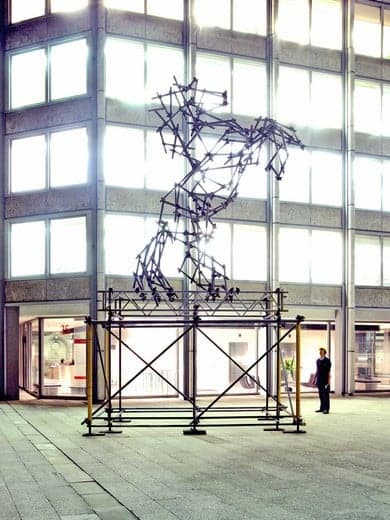
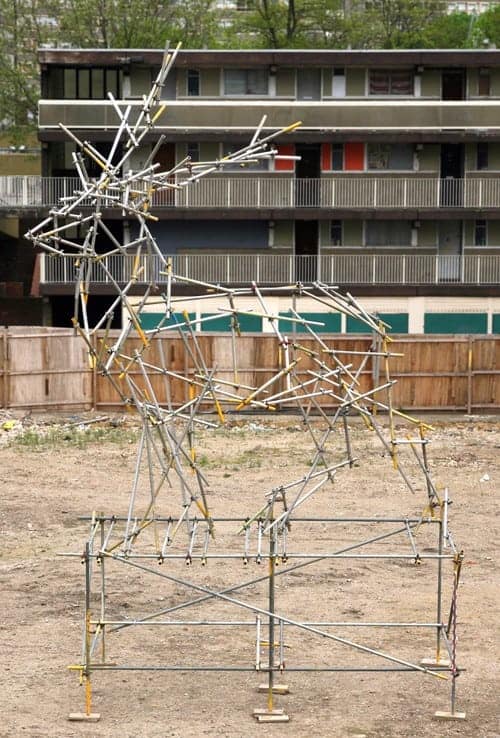
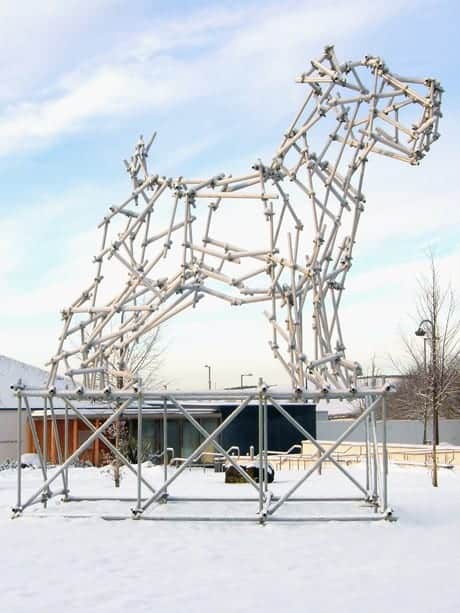
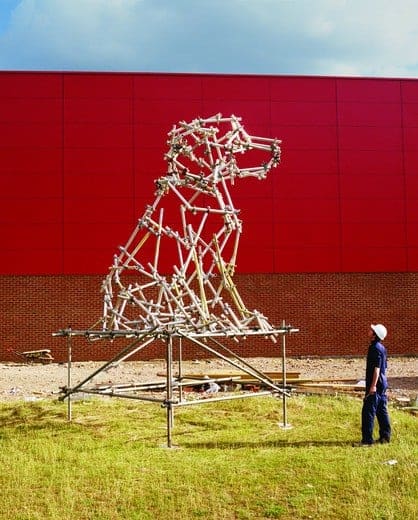
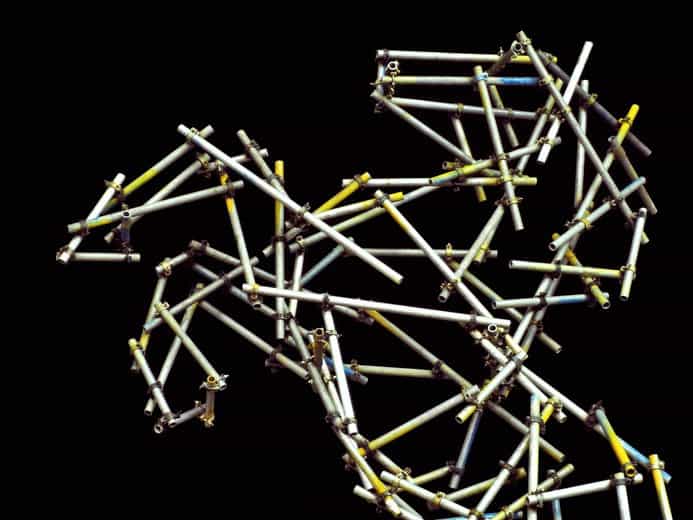
Theses amazing sculptures are the work of sculptor Ben Long the project started in 2004 and was in development for 2 years.

This ambitious series of scaffolding sculptures were inspired by his experience of working on construction sites as a teenager and each one took up to 3 weeks to construct using tube and fitting. Throughout the project Ben worked with specialists including D+R Scaffolding Group and Amiri Construction Ltd.
stag-scaffolding-sculpture-1pr


OLYMPUS DIGITAL CAMERA


Ben_Long_01.tif


20-benlong-horse-scaffolding-sculpture-detail-02-jpg


20-benlong-horse-scaffolding-sculpture-01-jpg
Read more at scaffmag.com
 

Monday, April 18, 2011

Common Sense Common Safety

Common sense is a term used by tabloids, politicians and lazy managers to mean that you don’t need to explain the risks associated with something because it’s common sense and therefor everyone already understands if something should be done, how something should be done, precautions that should be taken.

Health and Safety for Beginners

Common Sense Common Safety

Common sense is a term used by tabloids, politicians and lazy managers to mean that you don’t need to explain the risks associated with something because it’s common sense and therefor everyone already understands if something should be done, how something should be done, precautions that should be taken.

For example most people would consider it common sense not to inhale poisonous fumes in the knowledge that it could give them cancer and other adverse health effects…. but people still smoke tobacco which they take from packets which state in large type “Smoking Kills”, so that particular sense is not common to them.

Another example:- most drivers of vehicles would agree that driving across a level crossing when the barriers are down is not a sensible thing to do, but people do drive and walk across closed level crossings frequently (as evidenced by the transport police report on the subject).

Workplace examples showing that common sense does not in fact exist can be seen by looking at the prosecutions database on the HSE website, where you can see that people go on fragile roofs with no precautions, work in excavations that are not supported, access elevated positions using unsafe structures and equipment, walk behind reversing vehicles, etc.

Cultures are diverse,and this leads to different perceptions of what is an acceptable risk to safety or health.

For example it was considered acceptable to a factory in china that people making popular IT devices were regularly jumping from the roof of the building It took a whisleblower publically telling the CEO of the American company who sell these devices about it to get something done about it… in UK one such suicide would have been all over the news and something would have been done immediately.

The culture in china is very different from the culture in the UK. The cultures in East European countries, India, Pakistan, Brazil, and Middle Eastern countries are all very distinct from each other with regard to the value of human life and shown by the level of protection at work and the level of risk which is considered acceptable. People from these different cultures bring their own values with them when they come to the UK to work, so there is little commonality to be found in their perception of risk and their willingness to work within a UK regulatory regime, which makes work in this field much more challenging and interesting, one of the reasons I enjoy it so much.

Because of the evidence I am faced with I have concluded that the term Common Sense means radically different things to different people based on their age, past experience, training, and cultural background.

If the meaning of a term is not standard and clear, then it is at best unreliable and probably counterproductive to use it to convey any meaningful information, so you’ll never find me using the term Common Sense except to discourage its use by people who are trying to convey an important and clear message.

Sense is not a measurable thing, there is no scale we can use to determine how much of it an individual has, it cannot be relied upon to control behaviour (as evidenced by the examples above) and to assume that some standard amount of sense is somehow common to all people is obviously a preposterous proposition.

Where someone can be injured or their health damaged, it is clear that some subjective arbritary value of sense cannot be relied upon to prevent that person being harmed.

If there is a significant risk, only planning and competence can be relied upon to provide individual protection. To rely on common sense instead is to rely on a fictional thing, and no protection at all.

I am however very happy for journalists, and politicians to go about their lives without any control over their safety except their own common sense, since that would thin out the population of these people to a lower and more acceptable level, and perhaps encourage them to stop slagging the people who currently work to keep working people safe.

Read more at www.healthandsafetytips.co.uk
 

Tuesday, April 05, 2011

HSE simplifies business advice

This site is for employers and those who want some basic information on what they must do to make sure their businesses comply with health and safety law.

Amplify’d from www.hse.gov.uk
HSE

Health and safety made simple

The basics for your business

If you think health and safety has to be complicated - it doesn’t. This site will make it easier for you to comply with the law and manage health and safety in your business.

For many businesses, all that’s required is a basic series of tasks. The site will take you through the steps and help you make sure you have done what you need to - and no more.

Read more at www.hse.gov.uk
 

Monday, April 04, 2011

Japan - cigs and alcohol more deadly

The after effects of the quake and tsunamis in Japan will cause clear and on-going pain and suffering for years, while the risks from the damage to the Fukushima Daiichi nuclear reactors look to be subsiding...Geoff Russell argues that any and all risks need to be put in perspective.

Amplify’d from www.thepunch.com.au

Cancer deaths in Japan will be from alcohol and ciggies

The after effects of the quake and tsunamis in Japan will cause clear and on-going pain and suffering for years, while the risks from the damage to the Fukushima Daiichi nuclear reactors look to be subsiding - see here for the latest updates. Meanwhile, Geoff Russell argues that any and all risks need to be put in perspective.

More deadly than nuclear. Pic: Getty Images

Residents living in the vicinity of the Fukushima nuclear plant face some considerable cancer risks during coming decades. They will come primarily from cigarettes, red meat, alcohol and salty foods. These should hardly be called risks, since each will definitely cause tens of thousands of new cancer cases every single year throughout Japan.

An additional possibility, a potential risk, hardly visible in comparison, may come from radiation as a result of the quake and tsunami damage at the Fukushima Daiichi nuclear power plant.

After the unrelenting horror of the biggest earthquake and tsunamis ever to hit Japan, you’d think the world’s journalists would jump on the biggest good news story to emerge from the carnage. This good news story is the performance of Japan’s nuclear reactors.

While the media focuses on the serious problems in a single cluster of older reactors, the more modern reactors shut down gracefully. Of 54 reactors in Japan with a combined capacity of 48 gigawatts, five clusters were affected by the quake with four shutting down successfully despite sometimes significant damage.

The cluster closest to the epicenter of the quake was Onagawa. It experienced significant damage, including a fire, but shut down without problems. Fukushima Daiichi isn’t far from its slightly newer sister plant, Fukushima Dainii. The four reactors at Dainii shutdown successfully despite significant damage caused by the quake.

The two plants were designed to withstand a 5.7 metre tsunami, but the tsunami that hit these two plants was 14 metres high.

The reactors didn’t buckle like some bridges and even the explosions at the reactors were trifling compared to the deadly conflagration at the Chiba oil refinery. The reactors stood up substantially better than the tsunami sea walls which turned back the waves of the massive 1960 Chilean earthquake but which failed this time with catastrophic consequences.

Despite this good news, the top 12 stories on Yahoo News that came up on the Sunday after the event included the following headlines; “Japan’s nuclear crisis deepens”,  “Japan quake evacuees scanned for radiation”, “Nuclear meltdown new threat for Japan”, “Japan grapples with nuclear crisis”.

There were only three other earthquake stories and five stories unrelated to the quake. While it was reasonable to talk about a Fukushima nuclear crisis there was never a national crisis.

Sunday’s nuclear focus was followed by a relentless week of fear mongering with every event related to the plants, regardless of magnitude or import, being painted as a harbinger of national, if not global, doom. This relentless fear mongering wained a little during the second week when the crisis in Libya finally shifted to lead story.

Nevertheless, the smallest puff of smoke from the reactors managed to reignite echos of the previous week’s panic.

Radiation facts missing in action

Most journalists showed an ignorance of radiation basics that could have, and should have, been rectified by 10 minutes with Wikipedia. Why didn’t they bother? SMH on March 16 reported that 100 millisieverts of radiation in a year would elevate cancer risks and followed it with:

Measurements at the damaged plants are now well below the lethal levels of 400 millisieverts an hour measured yesterday.


Lethal? 400 millisieverts per hour? Such levels are definitely to be avoided, but lethal? A key question is to ask what “elevate” means.

Two and a half hours spent receiving 400 millisieverts per hour is 1,000 millisieverts. According to Kelly Classic, a radiation physicist at the Mayo Clinic, if you exposed 125 people to such a dose, you would expect one of them to get cancer sometime in their life. How many of 125 people would normally get cancer? About 40.

In Australia, roughly 1 in 17 men get bowel cancer with another 1 in 22 getting lung cancer. About half of those bowel cancer cases are due to eating more than one red meat meal per week. It’s a safe bet that cigarettes, sake and even Aussie beef will cause far more cancers in Japan than the Fukushima reactors. There are about 60,000 new cases of both bowel cancer and lung cancer each year in Japan.

Lastly, it isn’t just that the risk of cancer from radiation is low, the most likely cancer from a reactor problem is probably thyroid cancer. If you had to choose a cancer, thyroid is better than most. According to Professor Kirk Smith of Berkeley University in the US, less than one per cent of thyroid cases caused by Chernobyl were fatal.

The workers at Fukushima know these things. It’s their job. Their bravery in getting on and fixing the damage was just that, bravery. It was exactly the same kind of heroism shown by emergency workers around the world in the recent earth quakes and floods. Fires, explosions, debris, and contaminants. All pose risks.

The radiation risk can at least be measured and managed with some precision.

The one media exception I saw to the ill-informed radiation fear mongering drivel during the first week was a report by Stan Grant on Friday 18th which put radiation risks in some perspective. But, two days later, Channel 7 was back to form showing a clearly terrified expat Australian in Tokyo who had overdosed on fallout fear and was mortified at not being able to afford to fly out of Tokyo and back to the bosom of safety in Australia.

Whipping up such terror should be a sackable offence.

Basic Questions

Journalists should have asked and answered some basic questions.

How many people died due to radiation releases or leaks in the nuclear plants? None reported so far. Probably none ever.

What exactly is a meltdown? Why was the word thrown around like a prescription for global doom? There have been six meltdowns in US reactors over the years. The worst killed three workers. This is a personal tragedy, but more like a bad weekend on Adelaide roads than a global catastrophe.

If a meltdown did or has already occurred, how many people would die? Usually none. A meltdown is a nuclear plant operator’s worst financial nightmare ... your investment is trashed and you are in for a long running stabilisation bill ... but it isn’t necessarily life threatening.

At Three Mile Island the molten core ate less than 1 inch into the 8-inch reactor vessel and if it had gone through that, there were further barriers to absorb the energy. The worst case risk of an explosion is certainly real, and has been admitted by the UK Chief Scientific Adviser John Beddington. But he pointed out that it could be nothing like Chernobyl and that any significant radiation impacts from this unlikely event would be limited to within 30 kilometers. Hence the evacuation.

As each day passes, this unlikely event becomes even less likely.

The desperation at the nuclear plants is three fold. The financial and safety incentives are obvious. But more importantly, Japan has lost about 18 giga watts worth of generating power as a result of quake damage. This is evenly split between the thermal plants (gas, coal and oil), and nuclear plants.

All of the operators are desperate to fix the damage and return power to their customers. Vital machinery and equipment (frequently medical equipment like machines to X-ray limbs broken by the tsunami) needs power. Without refrigeration, food poisoning rates will rise.

What about the explosions? Yes, there have been explosions but without the horrific afterburn of the oil refinery fires. The Chiba refinery fire was finally extinguished on 21st of March. For 10 days this fire spewed out toxic fumes, the refinery was offline and workers couldn’t enter the complex. The fires at Fukushima were relative wimps that didn’t even manage to melt the light metal frame. The explosions didn’t damage the reactor pressure vessel and were very unlikely to.

While I saw the huge dangerous fumes of the Chiba refinery fire once on the night it started, the relatively minor explosions at the nuclear plant were repeated by the TV media ad-nauseum.

Nuclear designers don’t aim to prevent all explosions, just the ones that matter. I hesitate to make light of a serious matter, but do you care if your dunny explodes? Absolutely, if you are on it. But you don’t necessarily make dunny explosion prevention top of your design specification.

The reactors that have caused such concern were designed to prevent catastrophic failure and have done just that. These are 1970s reactors and don’t have the bells and whistles of later models but are from an era when people were sent to and from the moon. There is nothing dodgy about the engineering. It wasn’t perfect and lessons will be learned. But nobody died.


It’s worth repeating the last sentence. Nobody died. They died in the quake and the tsunami and the fires, but not due to the reactor failures. Nobody died at Three Mile Island. Not due to the meltdown and not due to any radiation leaks. Nobody died.

People in the quake area are facing a large range of bacterial and viral agents that will, with certainty, be hospitalising and killing people right now. The amputations will be many and horrible. They are happening now while your TV news is showing you people in Tokyo buying bottled water. The health care logistical challenges remain enormous. Next to these certainties, radiation risks are trifling.

I don’t know what the TV news is and was reporting in Japan, but I fervently hope that Japanese children aren’t having nightmares fuelled by reporting similar to the shock-jock rubbish which predominated in Australia.

The performance of the nuclear power plants in the face of the largest quake ever to hit the region has been a spectacular success and one of the biggest unreported good news stories of the decade. But it wasn’t Hollywood or Bollywood. There were some serious problems that will inform future designs. Particularly as concerns spent fuel ponds. “Keep covered with water” ... how hard can that be?

If you wanted to test a reactor design against this kind of event, you could never stage anything even close to being this bad. While the nuclear plant workers were and are being both heroic and vigilant, solid engineering design work has already done the major job in protecting lives.

Lastly, just one parting thought. The much hyped Andasol I solar thermal power station in Spain is a 50 mega-watt unit. This is about 20 times smaller than most of the Japan’s 54 nuclear reactors. Andasol has a tank of molten salt which is 14 metres high and 38 meters in diameter.

This molten salt acts as a battery to store energy when the sun isn’t shining. To replace a single nuclear plant, you will need a tank 20 times as big, holding about half a million tonnes of molten salt at 400 degrees centigrade. If you were living on a fault line in Japan, which would you prefer to live next door to ... the ocean, the molten salt, an oil refinery or a nuclear plant? How would you farm land after a half million tonne salt spill?

The main game is climate change and there is no free lunch. If there is a solution, it will involve nuclear power.

Read more at www.thepunch.com.au
 

HSE forklift death prosecution - Video

Three years ago Swansea man Darren Small was struck by a forklift truck and died. In this video, his mother Barbara and his sister Kelly talk about Darren's death and the effect it's had on their family and the wider community.

Health and Safety for Beginners
See more at www.healthandsafetytips.co.uk

HSE forklift truck death prosecution


Three years ago Swansea man Darren Small was struck by a forklift truck and died. In this video, his mother Barbara and his sister Kelly talk about Darren’s death and the effect it’s had on their family and the wider community.


Download the HSE’s video directly from the HSE’s site here…


Llanelli company fined £400,000 after employee dies at work – Video.

Read more at www.healthandsafetytips.co.uk
 

Monday, March 28, 2011

New downloads on HSfB - health & safety

New download tools and articles for health and safety

New Downloads on Health and Safety for Beginners


Health and Safety for Beginners
See more at www.healthandsafetytips.co.uk
 

Sunday, March 20, 2011

View from space Japanese Quake and Tsuna

Astronauts Photograph Japan Quake and Tsunami Aftermath from Space - incredible images showing the sheer scale of things as it happened.

Amplify’d from www.space.com

Astronauts Photograph Japan Quake and Tsunami Aftermath from Space


by Tariq Malik, SPACE.com Managing Editor
Date: 15 March 2011 Time: 04:21 PM ET
Astronaut photo of the aftermath of the March 11 earthquake and tsunami in Japan. This image was taken on March 13, 2011.


On March 13, 2011, floodwaters lingered along the Japanese coast near the city of Sendai, in the aftermath of a magnitude 9.0 earthquake. An Expedition 26 astronaut took this photograph from an altitude of 220 miles (350 kilometers) up on the International Space Station. North is at upper right. This picture shows an area north of Sendai, and part of the city of Higashimatsushima appears along the right edge of the image.


CREDIT: NASA/JSC


Astronauts in space have snapped photos from orbit of the effects of the massive earthquake and tsunami that have devastated Japan.


High-resolution photos taken from the International Space Station show some of the areas hit the hardest by the 9.0-magnitude earthquake and subsequent tsunami that struck the northeastern coast of Japan.


"Our thoughts are with our friends in Japan," Italian astronaut Paolo Nespoli , one of the three astronauts staying at the station, wrote in a Twitter post on March 13 – the same day one of the newly released photos was taken.


The March 13 photo captured by the astronauts shows how the region north of the coastal city of Sendai  appeared from the station's altitude of 220 miles (354 kilometers). The image shows Japan's Ishinomaki Bay, Naruse river and part of the city of Higashimatsushima. Flood water is rampant in the view.


"Both agricultural fields and settled areas are submerged by muddy water in this image," NASA officials said in a statement. "Water left by the tsunami surrounds the crisscrossing runways at Matsushima Airport." [See the March 13 astronaut photo of Japan]


The Ishinomaki Bay can also be seen coated in oil, which leaked from oil refineries damaged by the earthquake and tsunami.


Another photo shows the coastline of Sendai and other nearby regions as they appeared yesterday (March 14) from a slightly lower altitude of about 215 miles (345 km).


"Through a thin haze of clouds, flooding was still discernible south of Sendai days after the massive earthquake and resulting tsunami," NASA officials said of the image. [See the March 14 astronaut photo of Japan]

Astronaut photo of the Sendai, Japan region after the March 11, 2011 earthquake and tsunami. This image was taken on March 14, 2011.
Through a thin haze of clouds, flooding was still discernible south of Sendai days after the massive 9.0-magnitude earthquake and resulting tsunami that struck on March 11, 2011. An Expedition 26 crew member took this photograph on March 14 from the International Space Station.
CREDIT: NASA/JSC
Japan's space station role


The $100 billion International Space Station is the product of five different space agencies representing 15 countries including Japan, which is a major partner in the project. [Photos: Japan Earthquake and Tsunami in Pictures]  


JAXA built the space station's largest single laboratory. It is named Kibo ("Hope" in Japanese) and includes a huge bus-size main module, an attic-like storage room, an exterior porch to hold experiments, as well as two windows, a small airlock and a robotic arm to move new experiments onto the outer porch.


Japan also provides unmanned robot cargo ships to deliver tons of supplies and hardware for crews on the space station. The second of these cargo ships, called HTV-2, is currently docked at the space station. 


The earthquake also damaged Japan's Tsukuba Space Center – the home of Japan's space station control room – and severed a communications link between the center and NASA's space station Mission Control in Houston, NASA officials said yesterday. 


In addition to the Tsukuba center, one other JAXA facility is closed and two others have had some services impacted, JAXA officials said on the agency's website.


Astronauts saddened by quake news


Japan has trained eight astronauts to fly in space with three more currently undergoing training at NASA's Johnson Space Center in Houston. One of Japan's spaceflyers – astronaut Naoko Yamazaki – has posted a reassuring note via Twitter to answer public inquiries of her safety.


"Thanx for caring messages for the earthquakes in Japan. I'm fine. Lost electricity last night," Yamazaki wrote just after the earthquake. "Sincere prayers to those who are still suffering. And thanks to all the rescue teams."


Yesterday, station astronauts expressed their heartfelt sympathies to Japan as they prepared to return to Earth.


"Our hearts go out to our partners in Japan that have suffered greatly," the station's returning commander Scott Kelly of NASA said during a televised statement. "We really feel for them and hope and know they will recover from this, as the Japanese people are very, very resilient."


Kelly, the station's Expedition 26 mission commander, spoke during a ceremony to transfer control of the space station to Russian cosmonaut Dmitry Kondratyev. Kelly and two crewmates are returning to Earth Wednesday, leaving behind three other crewmates who will stay on the space station.


Japanese astronaut Soichi Noguchi thanked his NASA counterparts and the entire world for the outpouring of public support for Japan and its citizens.


"Thanks for the kind words from all over the world," Noguchi wrote on Twitter. "Our thoughts and prayers to victims of disaster."

Read more at www.space.com
 

Tuesday, March 15, 2011

Fukushima radiation exposure perspective

IonActive's radiation protection advisor Mark Ramsay puts a bit of perspective on the radiation exposures as a result of the explosions at the Japanese nuclear plant, Fukushima.

Amplify’d from www.ionactive.co.uk

Ionactive Consulting Blog

15/3/2011 - Nuclear events in Japan – Radiation Dose ‘high enough to effect human health’

Good morning all. Well it is 0400 on Tuesday morning in the UK and I find myself writing this before I get up (could not sleep). The reports coming in from Japan and specifically details about the Fukushima plants are disturbing - there is no denying that. I find myself looking at the story unfolding and having to concede that the state of the plants seem to worsening more than I would have speculated. Regardless of whether I am ‘pro nuclear' or not, I am not going to jump into a hole and try and deny anything else.

The last few days, i.e. over the weekend and Monday (as it was an office day) I have found myself becoming quite involved in the media and watching closely what has been going on. From this point forward this will be harder to do as I am actually working (!) - I.e. client visits. So I will probably not be as up to speed as I would like regarding this evolving nuclear incident. However, before getting on the road I wanted to write down a few words about ‘dose' because I think it is important (and the media is full of all sorts of values now).

Events in Japan

Before doing that, I would just like to point you to the following article on the Depleted Cranium website ‘While everyone was focused on the nuclear plant'. For me this article puts into focus the tragedy that is unfolding in Japan, even at a time when the nuclear issues appear to be worsening. I will let you read the article but some highlights on the site are:

  • 2800 confirmed dead

  • Many more missing and feared dead

  • Hospitals damaged (without electricity or water)

  • Infrastructure destroy (rationing of water / electricity etc)

  • Number homeless probably in the millions

  • Millions of businesses destroyed or out of action (including major world manufacturers)

  • Dam failures

  • Oil refinery fires

  • Etc
  • If you had been away on another planet and had just come back and picked up a newspaper, or turned on the news, you would be forgiven for linking the above tragic list of outcomes to the nuclear incident - not least because most of the media publications are almost 100% on the nuclear story. Now, I really am not downplaying the nuclear event (I don't think you will find I have in the earlier posts if you read them carefully), but take a look at the list again and be clear that none of these were nuclear related.

    So, accepting that this is not nuclear related - what is then? Well clearly the issue is down to the health effects of ionising radiation. I do not have the time (or energy this morning) to provide a fully checked (and peer reviewed) description of the science surrounding health effects of radiation. The problem is that I can pick and choose from a multitude of training materials, but that simply does not work when you have such a potentially diverse audience. So what follows is a quick brain dump of ideas and thoughts, mixed with some media files (which are probably too detailed for the majority but I have nothing better).

    Critical persons exposed

    It is first important to consider who is being exposed and how. There are broadly two groups of people: nuclear plant workers and members of the public (I include general emergency workers, relief workers and the media in the second group). Those most likely to be exposed are clearly the plant workers - they are nearer to the plant than anyone else.

    Units of Dose

    This is where things can get a bit complicated (well at least in a short article such as this). What I am going to do is first direct you to two YouTube videos that I have had produced. If you cannot get YouTube because you are at work (etc) then sorry - perhaps you can catch them later. Parts 1 and 2 on Radiation Dose are below. Take your time over this and perhaps watch a few times.
    Read more at www.ionactive.co.uk
     

    Wednesday, February 09, 2011

    Runners - Five Foods to Keep Eating - chips, beer, coffee, peanut butter, steak.

    This is diet advice I love to hear about..."Banishing your favourite guilty food pleasures at the start of the year is always tough. Great news - according to dietician Dr Sarah Schenker, you don't have to. Stock up on beer, coffee and more - and reap their health benefits."

    Amplify’d from www.runnersworld.co.uk
    Welcome to Runner's World UK

    Five Foods You Shouldn’t Give Up

    Don’t abstain from your favourite foods - try consuming in moderation to mix pleasure with health benefits

    Are you struggling to cut back on your favourite foods now February is here? The good news is that a little of what you like might actually be better for your body.

    To debunk the myths about the foods you like most - and to show some of their surprising health benefits - we've got expert advice from dietician Dr Sarah Schenker (www.sarahschenker.co.uk).

    Discover the treats you can enjoy adding back onto your shopping list - and consuming in moderation - with our slideshow. 

    Picture credit: Jeffrey Coolidge/ Getty
    See more at www.runnersworld.co.uk
     

    Monday, January 31, 2011

    25% discount on all adverts on HSfB for Feb! New feature, spread the costs on some ads

    Health and Safety for Beginners

    Health and Safety for Beginners – Advertise With Us

    advertising on hsfb

    For February 2011 only, quote FEB11 for your 25% discount on any advertising package!

    The advertising space on HSfB offers a fantastic opportunity for your business to reach over 70,000 visits to the site per month, that’s nearly 4,000,000 hits!

    Not only that, we also offer advertising space within our monthly newsletter which currently reaches over 2,800 targeted ‘opt in’ health, safety and environmental professionals and students alike.

    New for 2011 – you can now advertise on our Blogclick for info

    New for 2011 – you can now spread the cost of advertising on many of our advertising packages.

    Click the images below for further information on each advertising package.

    Please contact us for further details.

    Read more at www.healthandsafetytips.co.uk
     

    Thursday, July 08, 2010

    HSfB Blog Finds a New Home

    Our blog has moved! After you have read below, please head on over to our new location here -


    Health and Safety for Beginners - Blog


    Ever since 6 September 2005 we have been blogging our HSfB Site News and HSfB Articles over at www.blogger.com.

    The time has now come for us to move on from hosting our blogs on third party servers, so we have taken the plunge and have created this brand new blog on our own servers right here athttp://www.healthandsafetytips.co.uk/blog/.

    We will still bring you all of our usual site updates including prize winners, new downloads, new articles and significant site news, but everything will be in one handy place. We will also bring you health and safety news articles that we think you might find interesting and useful.

    So, if you subscribe to our RSS feeds on our old blogs, you should update your RSS feed to our new one here - New RSS Feed.

    this is new

    You can also register with the blog and add comments to any post you like.

    Hopefully you like the new layout, which may change as we learn more about the blog software, but in the meantime please let us know your feedback to help us improve – contact us.